

This week’s Research Note is about:
Alfa Financial Software Holdings — ALFA
1. Why We Are Watching It
We are watching Alfa Financial Software Holdings because:
Its software sits deep inside the operations of asset finance companies, creating meaningful switching costs.
The business is becoming more recurring: H1 2026 ARR grew 17%, subscription revenue grew 14%, and subscription TCV grew 22%.
The economics are strong: high margins, a capital-light model, strong historical cash generation, and no bank debt.
The simple thesis:
Alfa may be evolving from a high-quality software-and-services business into a more valuable recurring software compounder, without needing aggressive capital intensity to get there.
The key question:
Can subscription revenue become a larger part of the business while Alfa keeps its margins, cash conversion, and competitive position intact?
2. What It Does
Alfa Financial Software develops, implements, and supports software used by banks, OEM finance companies, and other asset finance businesses to manage loans, leases, and financing contracts.
Its core product, Alfa Systems, handles areas such as originations, servicing, and collections.
The platform is live across 37 countries.
It makes money through:
Subscription revenue from SaaS and recurring services.
Delivery revenue from implementation, upgrades, migrations, and project work.
Software Engineering revenue from development work and some remaining perpetual license recognition.
H1 2026 revenue was £65.1 million:
Subscription: £24.1m
Delivery: £32.4m
Software Engineering: £8.6m
3. What We Like
The attractive parts:
Mission-critical product: Alfa Systems runs important operational infrastructure for large asset finance businesses. Replacing software like this can be expensive, disruptive, and risky. That creates real switching costs. The company also highlights long customer relationships and complex enterprise implementations.
Recurring revenue is moving in the right direction: ARR reached £48.5m, up 17%. NRR was 110%. Subscription revenue increased 14%, while Subscription TCV grew 22%. This is the part of the story we want to see becoming more important over time.
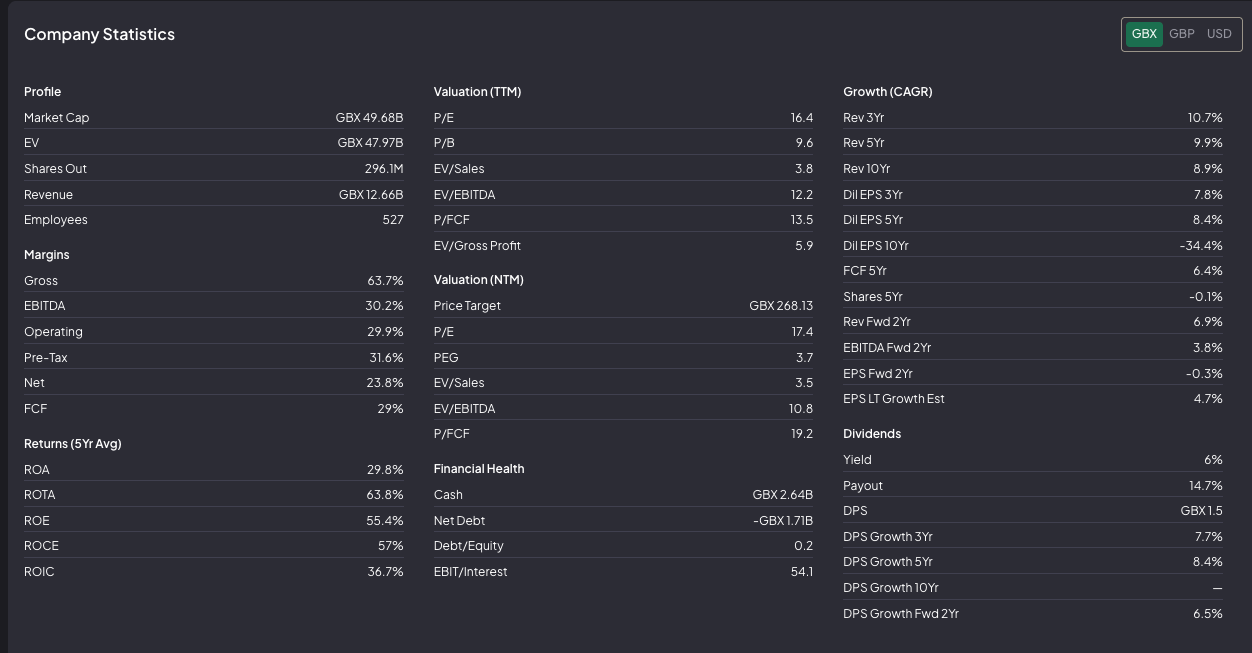
Very good economics: the earlier investment memo showed 2025 operating margin of 31.6%, FCF conversion of 97%, ROIC around 36.7%, and FCF margin around 29%. The business requires relatively little physical capital.
High ROIC matters because a company that earns attractive returns on capital has a much better chance of compounding value when it can reinvest intelligently. Free cash flow matters because reported earnings alone do not tell us how much cash is actually available to owners.
Strong balance sheet: Alfa ended H1 2026 with £22.2m of cash and no bank debt. That reduces financial fragility and gives management flexibility.
Possible growth runway beyond the current core: management continues investing in US Auto Originations, Fleet, Commercial Finance, cloud adoption, and AI-enabled implementation tools. Alfa invested £19.6m in software development in H1 alone. AI may also be unusually interesting here. Alfa believes it can reduce implementation effort and shorten time to value. One internal migration pilot reportedly reduced effort on a significant task by roughly 75%.
4. What Scares Us
The risks:
It is still not pure SaaS: delivery remains the largest revenue stream. Revenue and margins can therefore move with project timing, implementation intensity, and employee utilization.
Execution and people risk: Alfa needs skilled people to implement complex enterprise systems. H1 employee engagement declined to 64% from 78% after product engineering departures. Poor retention or weak execution could slow delivery and future customer wins.
Sales timing risk: Large enterprise contracts take time. In H1, some projects were delayed and one late-stage customer paused a project after management and internal priorities changed. Repeated delays over several periods would be a signal.
Cash conversion and margin quality: H1 operating free cash flow conversion fell to 76% from 88%, while gross margin declined to 60.2% from 64.2%. Some of this was caused by severance, FX, working capital, and lower engineering chargeability, but it still deserves attention.
Cyber risk: mission-critical software creates a moat when it works. It creates a serious liability when it does not. A meaningful security or availability failure could damage retention, reputation, and future sales.
5. Quality Score
Business Quality — 4/5
Strong vertical specialization
High switching costs
Mission-critical product
Long customer relationships
Strong position in a niche market
Financial Quality — 4.5/5
Strong historical free cash flow
High ROIC
High operating margins
Net cash balance sheet
Capital-light economics
Management / Network Quality — 4/5
Historically disciplined capital allocation
Product reinvestment continues
No bank debt
Management incentives include EPS and TSR
Excess capital has historically been returned to shareholders
Total Score
12.5/15
6. Fair Value Range
Our rough fair value range:
