

The S&P 500 is expensive.
The Shiller CAPE ratio reached 41, the highest level since the dot-com era, roughly the 99th percentile of the U.S. market’s historical valuation range, and more than double its long-term average of roughly 17x.
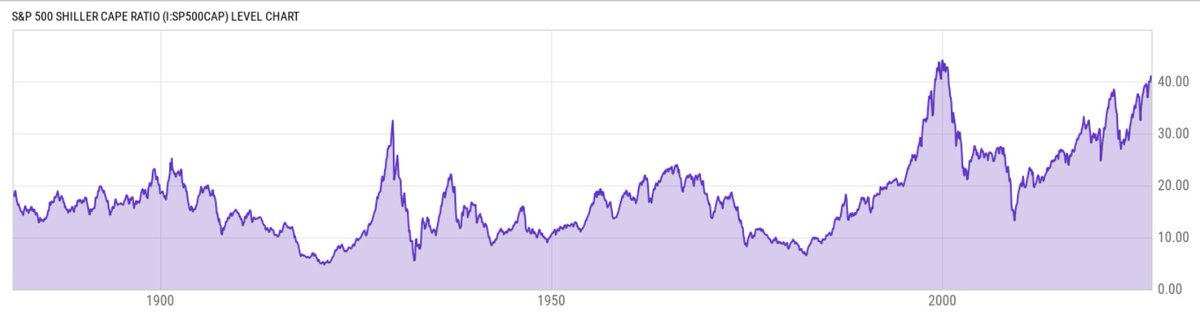
That does not mean the market is about to crash.
CAPE is not a timing tool.
But it does tell us something important: the price investors are paying for normalized earnings is unusually high.
And price matters.
One of the simplest lessons from value investing is that a great business can still be a poor investment if the price already assumes a great future.
High valuations leave less room for disappointment.
Lower valuations can create a margin of safety—but only if the underlying business is sound.
That second part matters.
Cheap alone is not enough.
Some stocks deserve low valuations because their businesses are deteriorating.
The better hunting ground is the intersection of quality and price: businesses with solid economics that the market may be valuing too pessimistically.
The S&P 500 is not “the market.”
It is a capitalization-weighted collection of companies. When its largest constituents command high valuations, the index can look expensive while individual companies elsewhere in the market trade at very different expectations.
So instead of asking: “Is the market expensive?”
A more useful question may be: “Where are expectations still low enough to create an asymmetric opportunity?”
Here are ten U.S.-listed companies from one of our current universe trading below 15x earnings.
1. Deckers Outdoor — DECK 0.00%↑
P/E: 11.6x
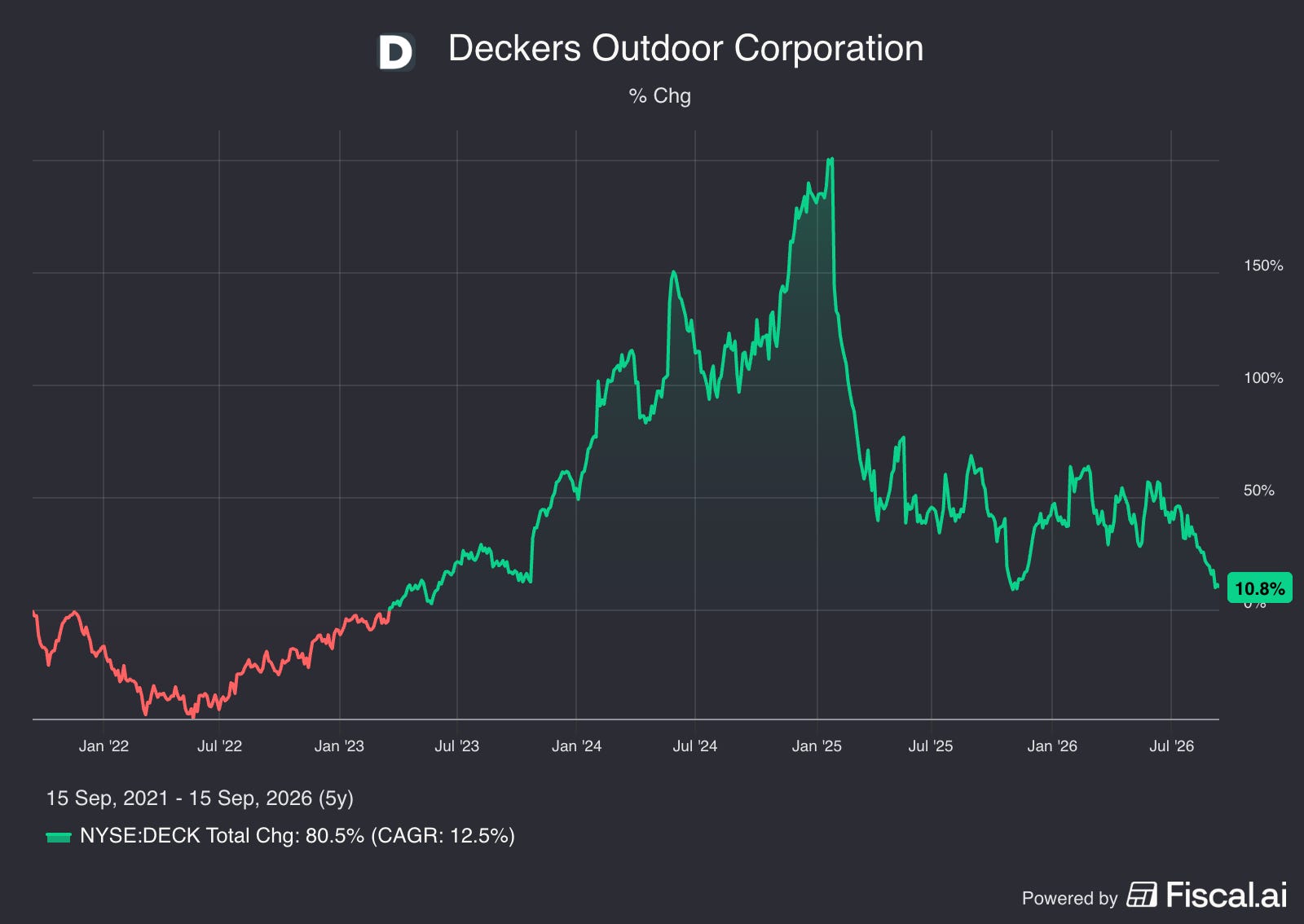
Deckers owns a portfolio of footwear brands including HOKA, UGG and Teva. The company sells globally through wholesale, owned retail and direct-to-consumer channels.
The research question is whether current expectations underestimate the durability of its brands—or correctly anticipate a normalization in growth.
2. Abercrombie & Fitch — ANF 0.00%↑
P/E: 12.6x
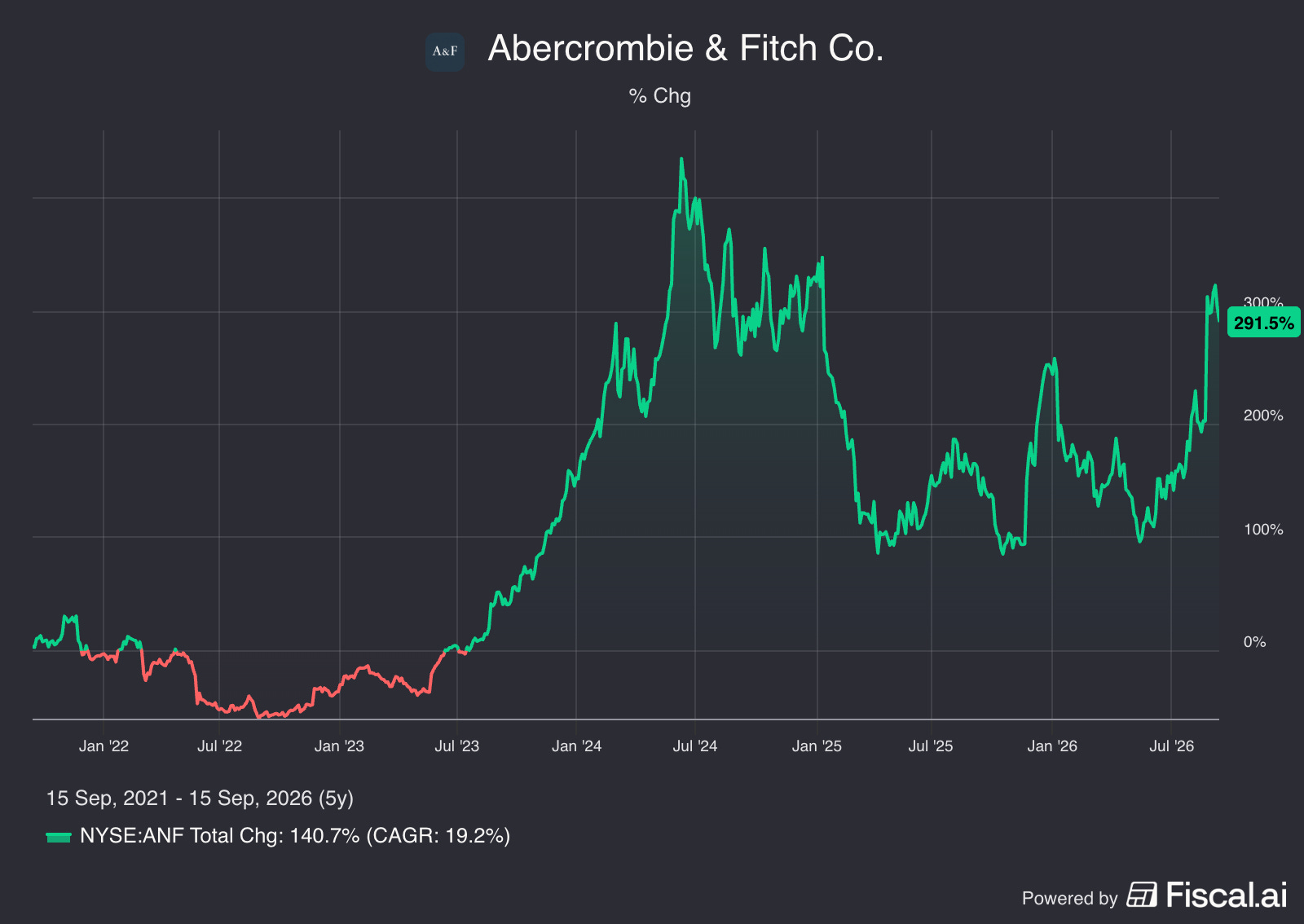
Abercrombie & Fitch is a global apparel retailer operating online and through more than 750 stores across North America, Europe, Asia and the Middle East.
The company has gone through a significant brand and operating transformation.
The question now is less about the turnaround itself and more about durability: how much of the improvement in margins and brand relevance can persist through a normal retail cycle?
3. Cirrus Logic — CRUS 0.00%↑
P/E: 14.7x
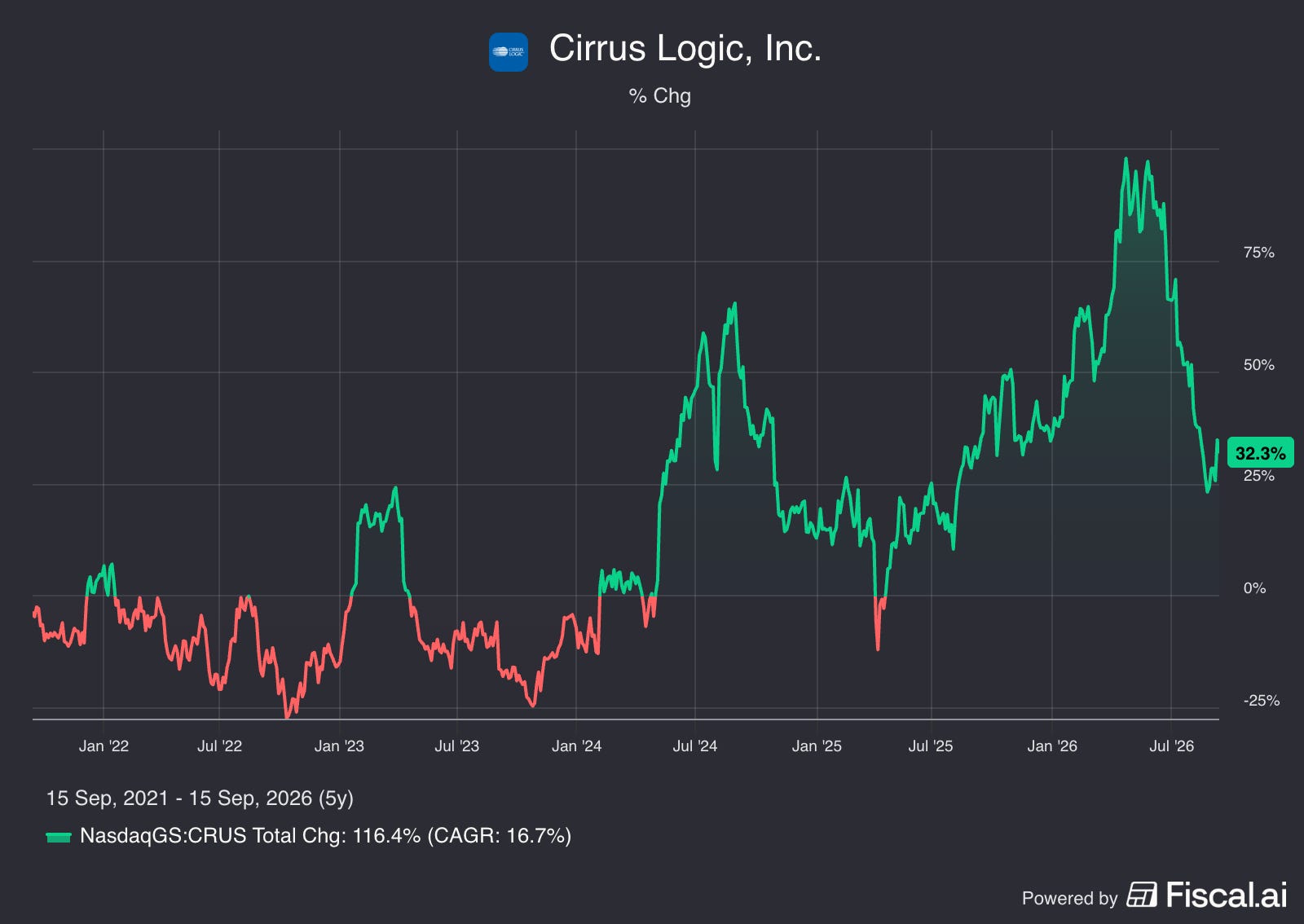
Cirrus Logic develops high-performance, low-power semiconductor solutions used in smartphones, wearables, laptops and other consumer devices. Its portfolio includes audio components, camera controllers, haptic technologies and other mixed-signal chips.
The key research issue is concentration and product dependence versus the value of Cirrus Logic’s intellectual property and ability to expand into additional applications.
4. H&R Block — HRB 0.00%↑
P/E: 7.9x
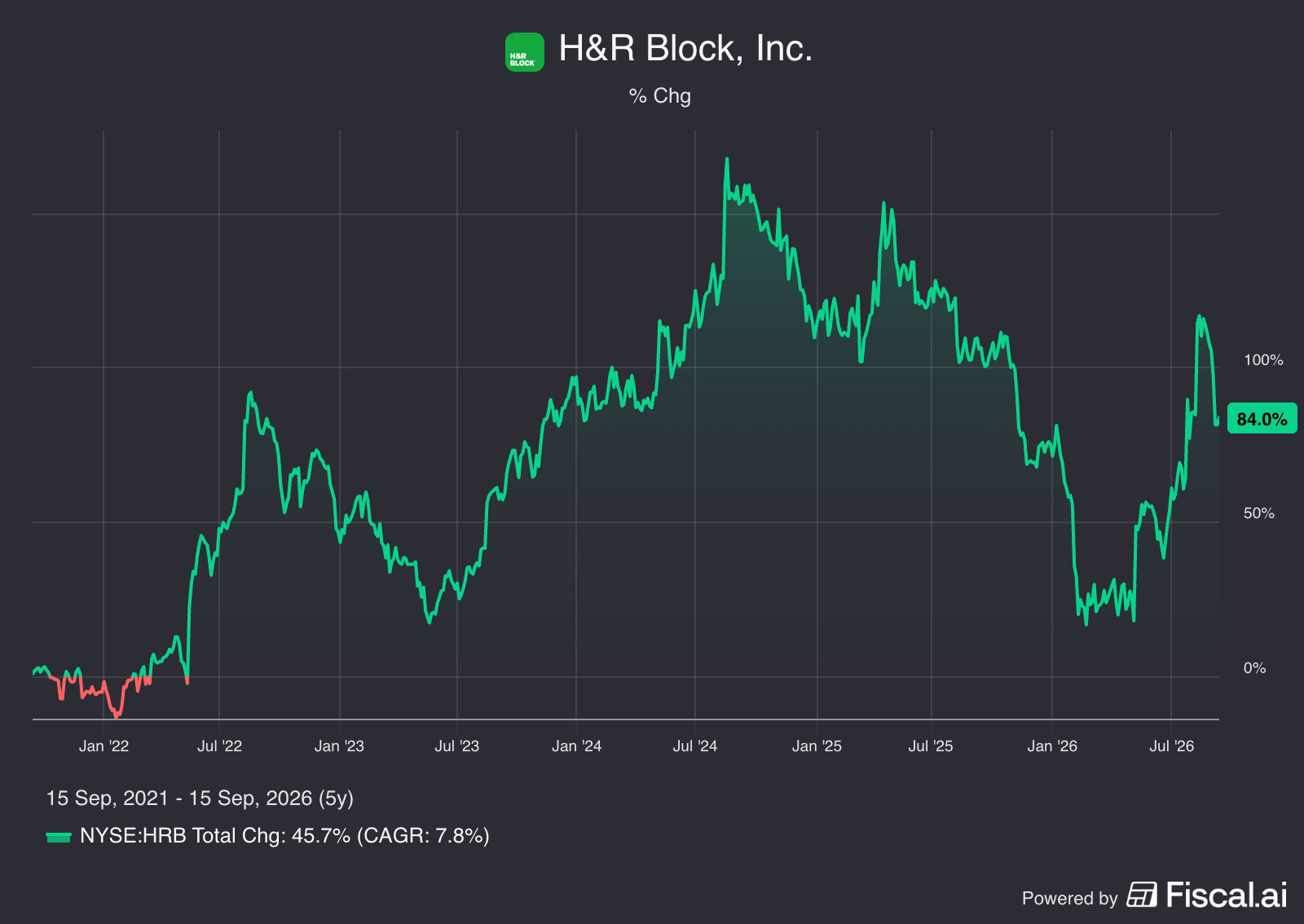
H&R Block is best known for tax preparation, but the business also includes digital tax products, small-business services through Block Advisors and Wave, and financial products.
The business operates in a mature category with recurring demand and a recognizable brand. The question is whether the market is underestimating the durability of that cash flow—or correctly pricing long-term disruption from software and changing consumer behavior.
5. Crocs — CROX 0.00%↑
P/E: 9.6x
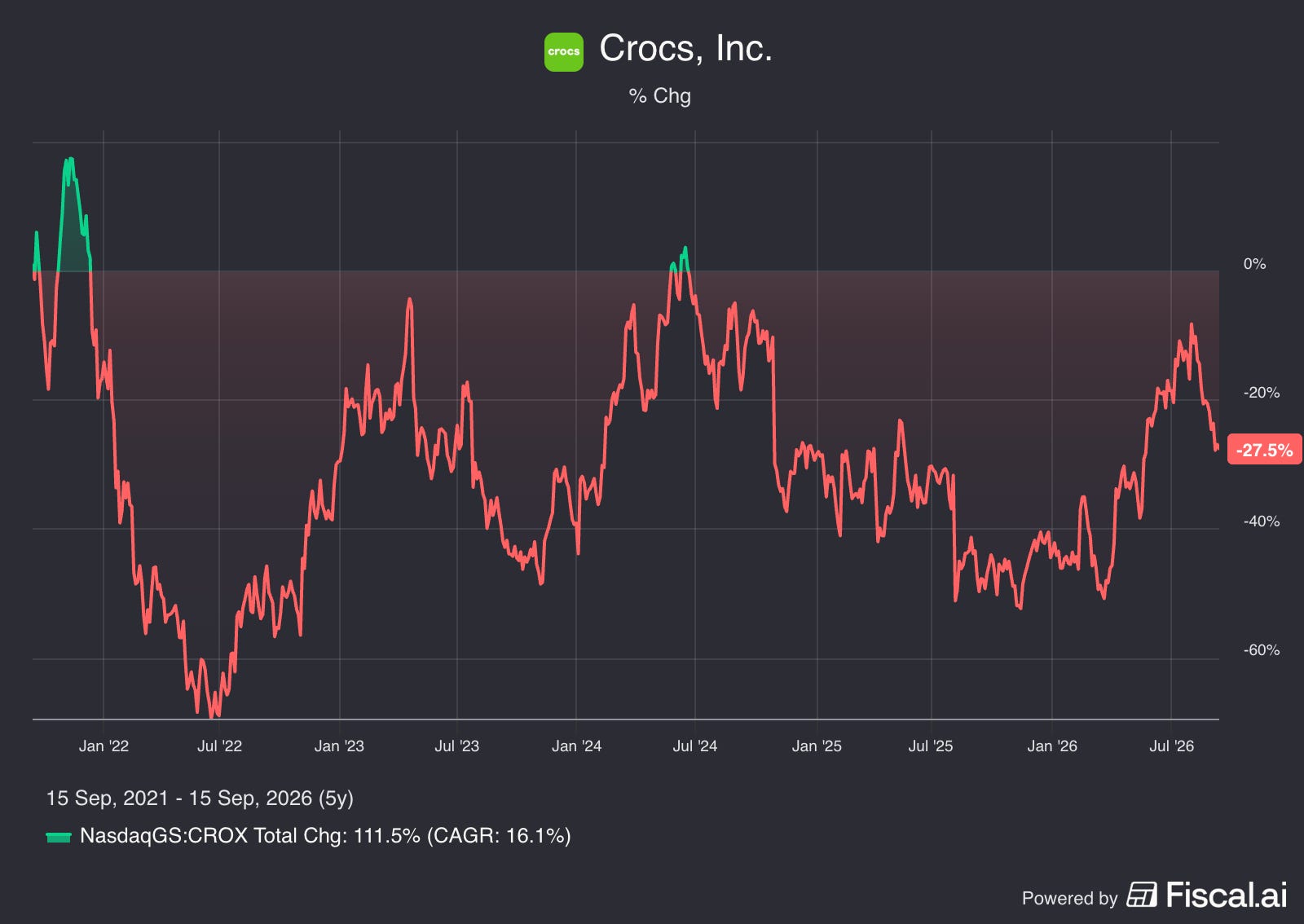
Crocs is a global casual-footwear company built around one of the most recognizable products in the category.
The company reported record second-quarter 2026 revenue and said its core Crocs brand exceeded $1 billion in quarterly revenue for the first time.
Is Crocs a durable global consumer franchise temporarily priced like a fad?
Or is the low multiple correctly anticipating that today’s margins and demand will be difficult to sustain?
6. Hamilton Lane — HLNE 0.00%↑
P/E: 14.6x
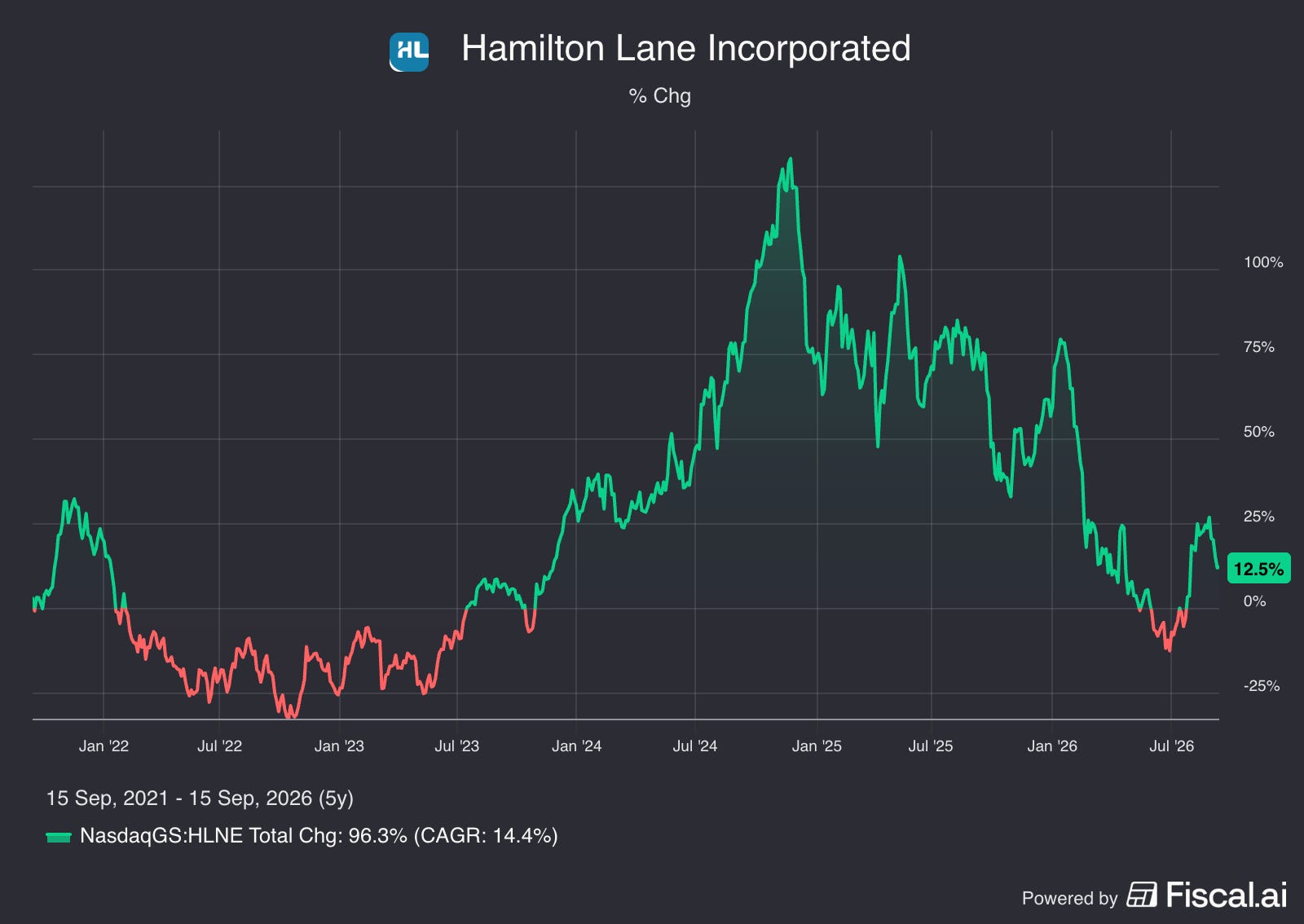
Hamilton Lane is an investment management firm focused on private markets.
Its business is built around providing institutions and other investors with access, portfolio construction and investment solutions across private-market strategies.
The interesting part is the business model.
Private markets have benefited from long-term growth in institutional allocations, but asset managers ultimately depend on fundraising, investment performance and client retention.
The research question is whether the valuation adequately compensates investors for those cyclicality and market risks.
7. Korn Ferry — KFY 0.00%↑
P/E: 14.6x
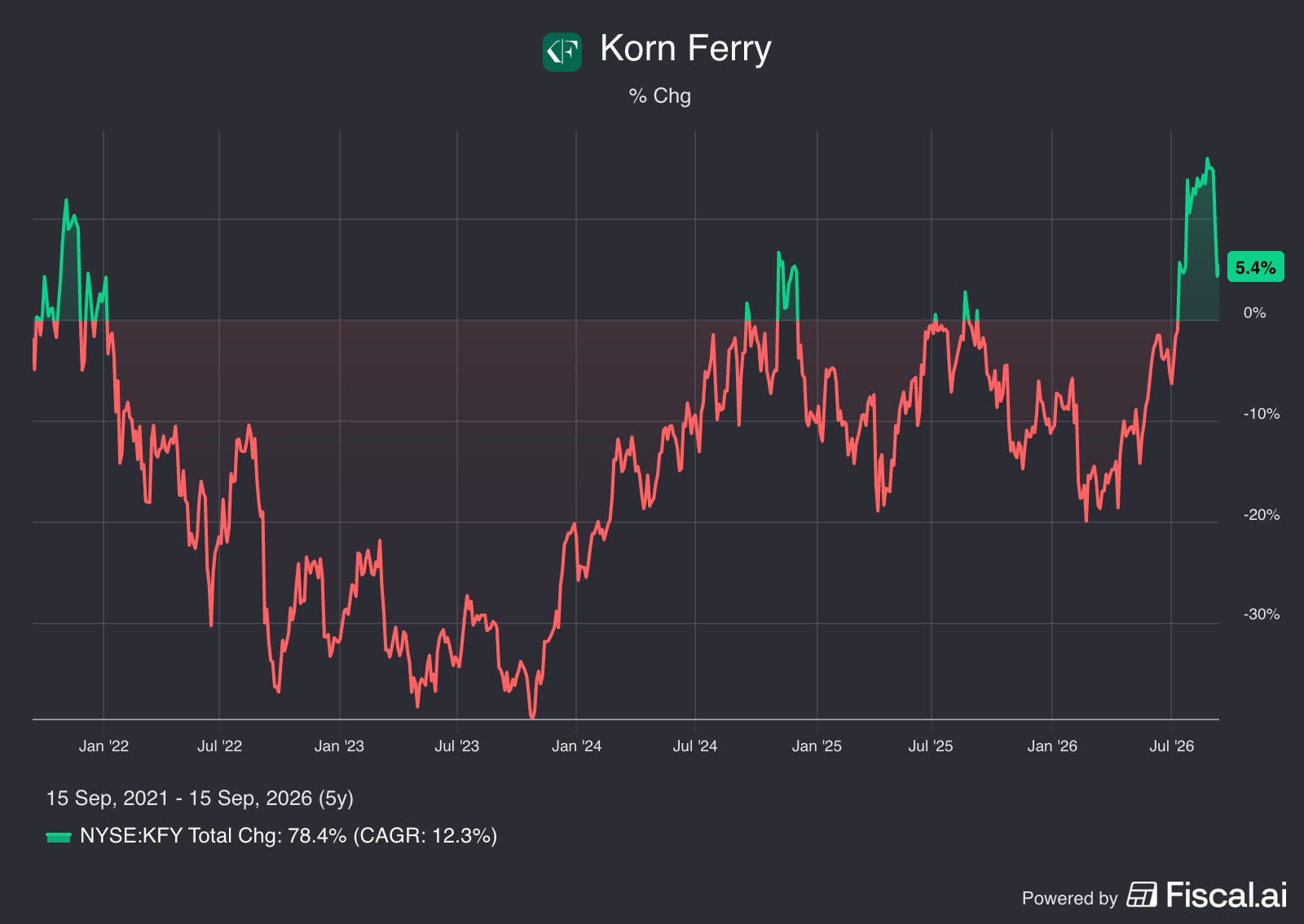
Korn Ferry is a global consulting firm working across leadership, hiring, compensation, organizational design and workforce strategy.
The company is often associated with executive search, but its business today is broader.
That matters because a more diversified consulting platform may deserve different economics than a pure recruiting company.
The key issue is cyclicality. Hiring and consulting budgets can weaken quickly when corporate confidence falls.
8. Kontoor Brands — KTB 0.00%↑
P/E: 14.0x
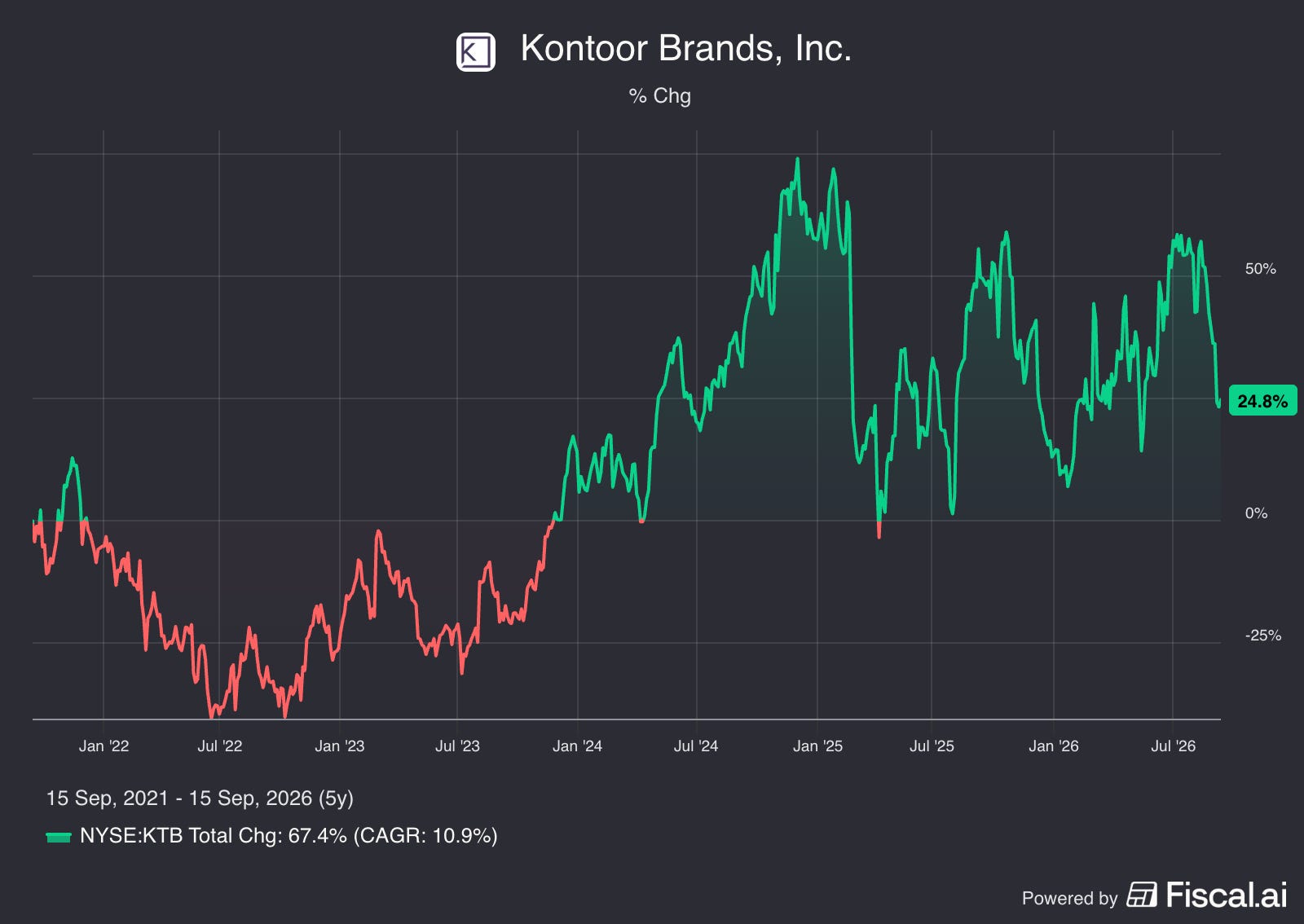
Kontoor Brands owns Wrangler, Lee and Helly Hansen, giving it exposure to denim, lifestyle apparel, workwear and outdoor clothing.
The research question is whether Kontoor can translate brand durability, direct-to-consumer expansion and international opportunities into consistent free cash flow without overpaying for growth.
9. Cal-Maine Foods — CALM 0.00%↑
P/E: 11.1x
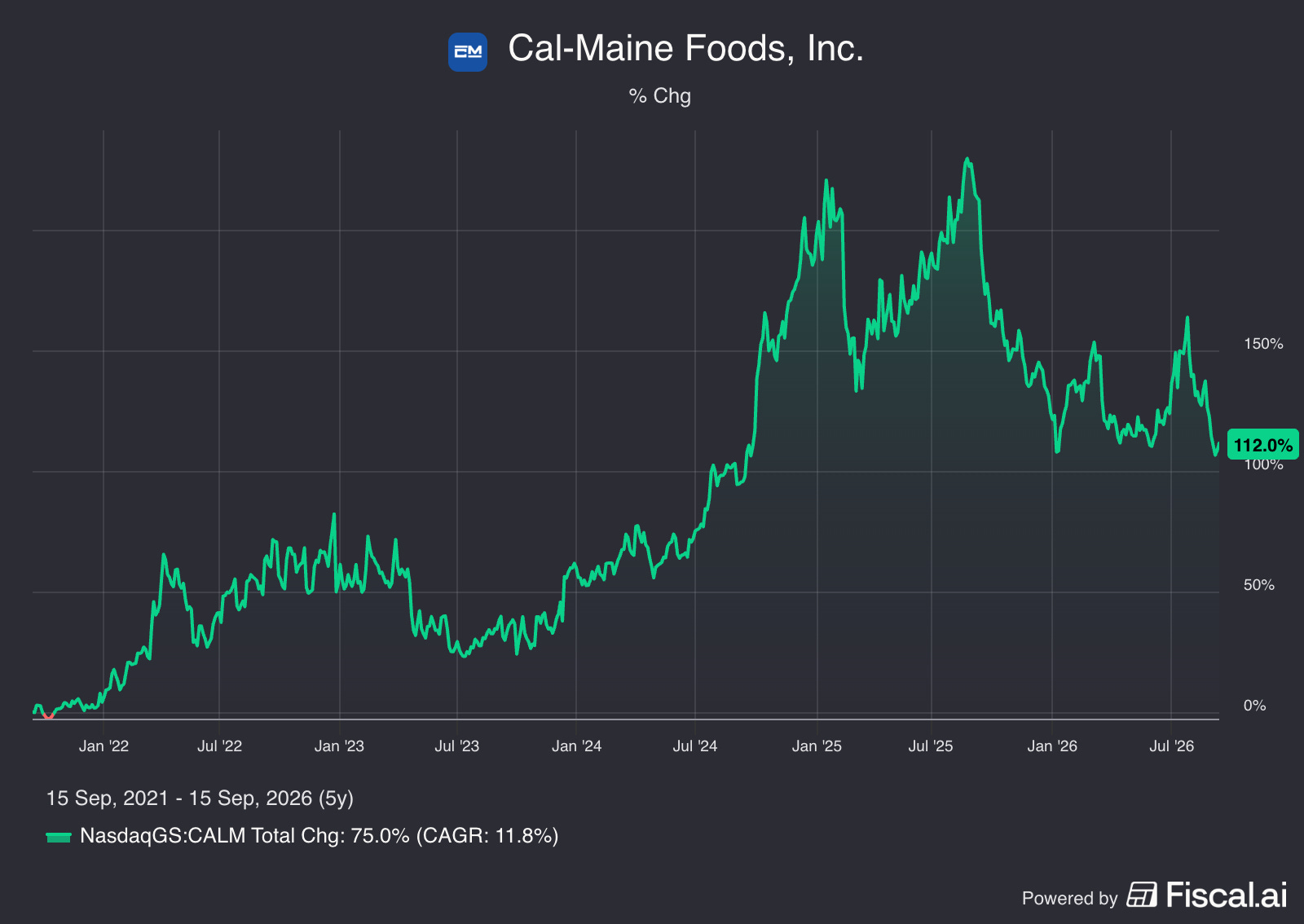
Cal-Maine is the largest egg producer in the United States.
Its business spans conventional and specialty eggs, with a growing presence in prepared egg-based foods. The company also operates with a vertically integrated production network.
The obvious complication is cyclicality.
Egg prices, feed costs, disease outbreaks and supply conditions can cause earnings to move sharply.
That makes the headline P/E particularly important to interrogate: are today’s earnings representative of normalized earning power?
A low multiple on peak earnings is not necessarily cheap.
10. Stride — LRN 0.00%↑
P/E: 11.6x
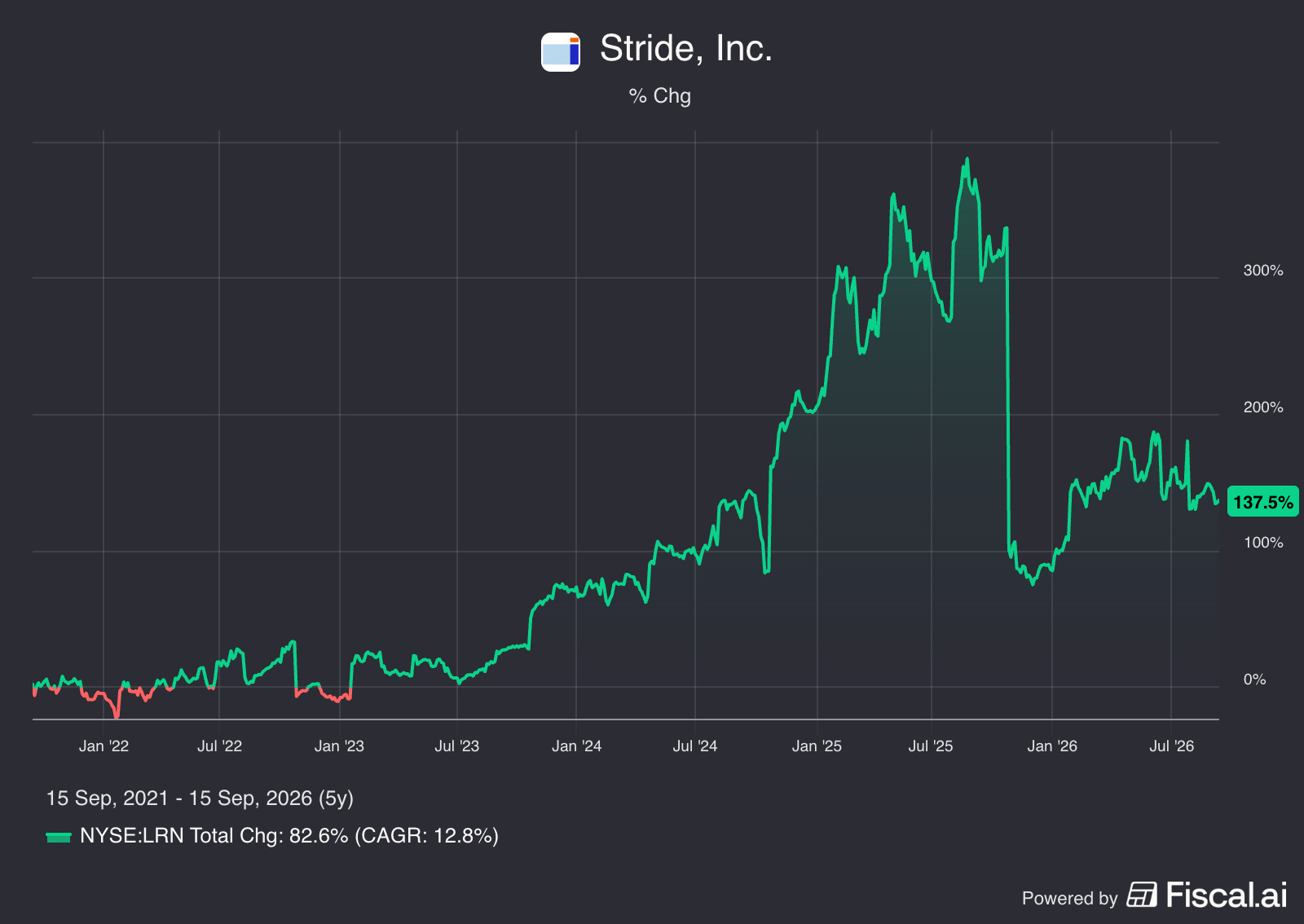
Stride provides technology-enabled education services across K–12 education, career learning, professional training and talent development.
The company serves learners across all 50 U.S. states and internationally.
Fiscal 2026 revenue reached $2.52 billion, while operating income increased to $450.8 million.
The question is whether online and career-focused education can continue taking share—and whether Stride can convert that demand into durable economics while navigating regulatory and execution risks.
Cheap is the beginning of the research, not the conclusion
None of these companies belongs in a portfolio simply because its low P/E.
A low multiple tells us something about Price.
It tells us very little by itself about Quality, Odds or Sizing.
That is why we use the QPOS framework:
Quality. Is this a business we actually want to own?
Price. What expectations are already embedded in the valuation?
Odds. What happens under bear, base and bull scenarios?
Sizing. How much risk would the thesis deserve if it survives the research?
The goal is not to find the statistically cheapest stocks.
It is to find situations where the gap between price and underlying reality may be large enough to matter.
Especially when the broader index gives us very little margin for error.
Why The Mispriced Research exists
The Mispriced Research is built around one question:
What is mispriced, why is it mispriced, and what would need to happen for the market to change its mind?
We look for liquid opportunities where expectations may be wrong, research the downside before the upside, and invest with a long-term horizon.
We publish the portfolio and put real capital behind the research.
You make your own decisions.
We do the research.
If that approach is useful to you, you can follow the full research process with The Mispriced Pro.
Pro includes:
Best Buys — 1/month: our monthly shortlist of the highest-ranked opportunities we are researching across quality, valuation and expected payoff.
Research Notes — 1/week: one focused deep dive each week covering the thesis, valuation, scenarios, risks and what would change our mind.
Portfolio Access: full access to holdings, weights, performance and portfolio history, plus an alert whenever we make a change.
Use code MISPRICED30 for 30% off your first year.
See you inside